Disposable Endoscopic Submucosal Dissection Knife D · T · H · J Four Head Types · ZYM-KM Series
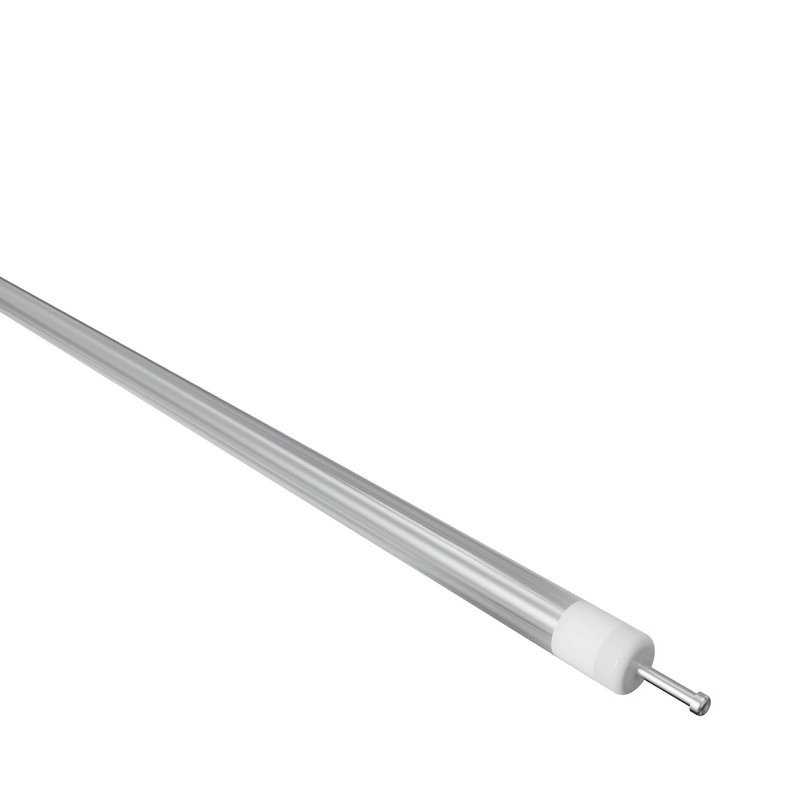 🔍 Click to enlarge
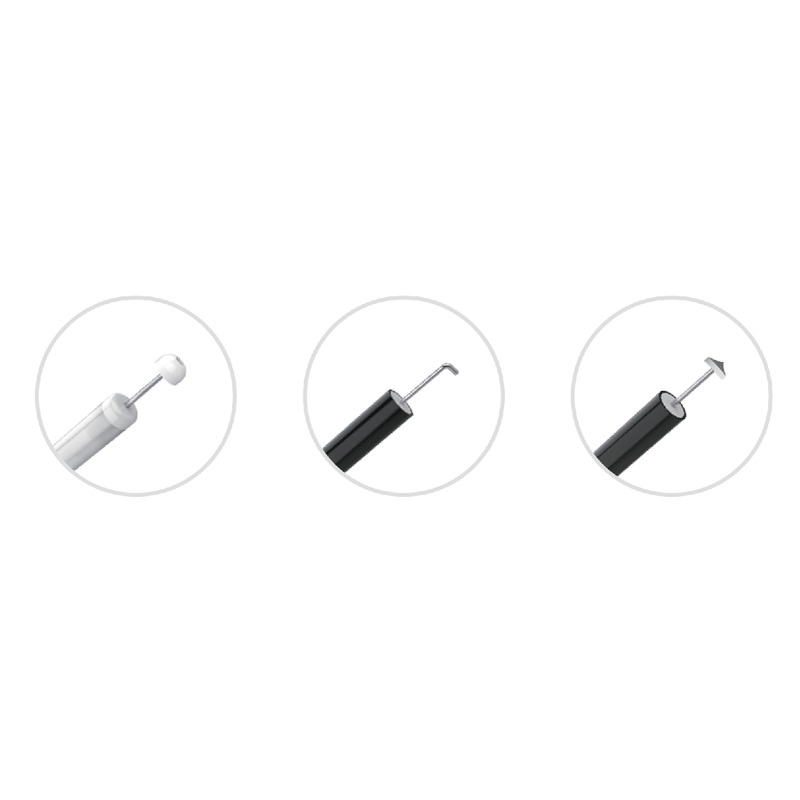
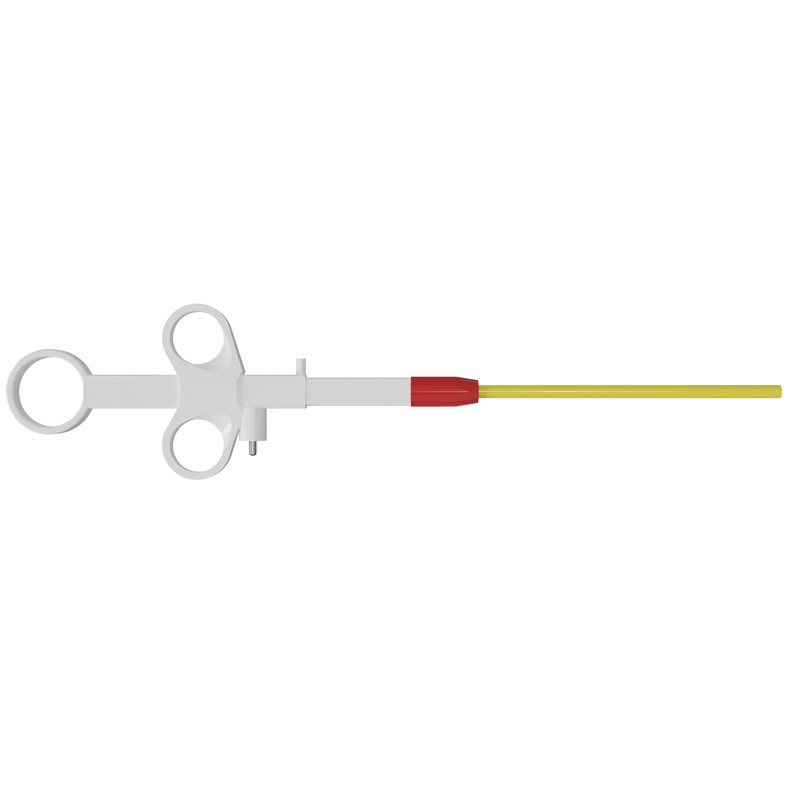
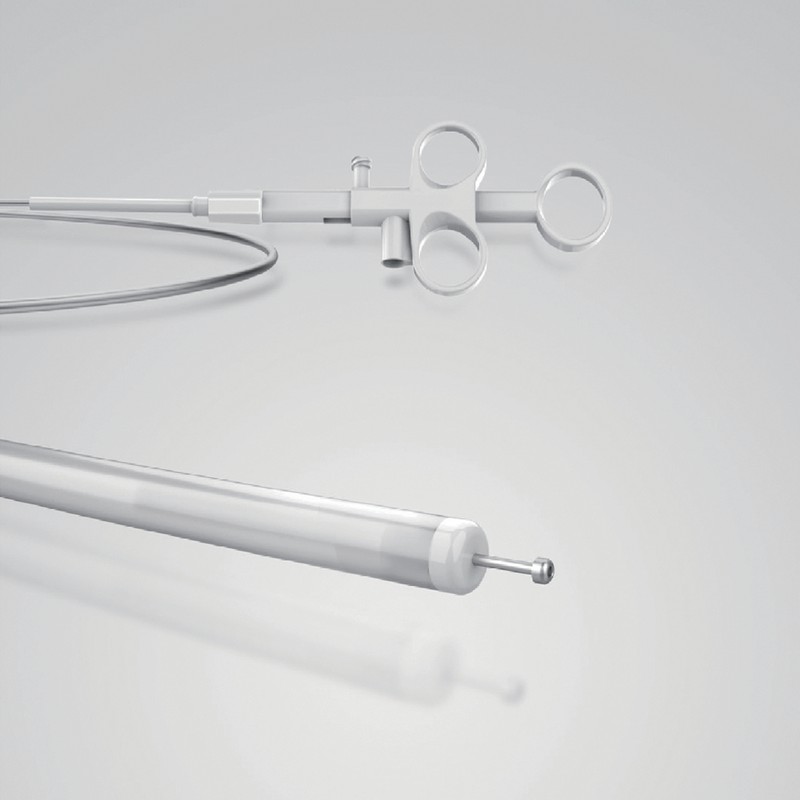
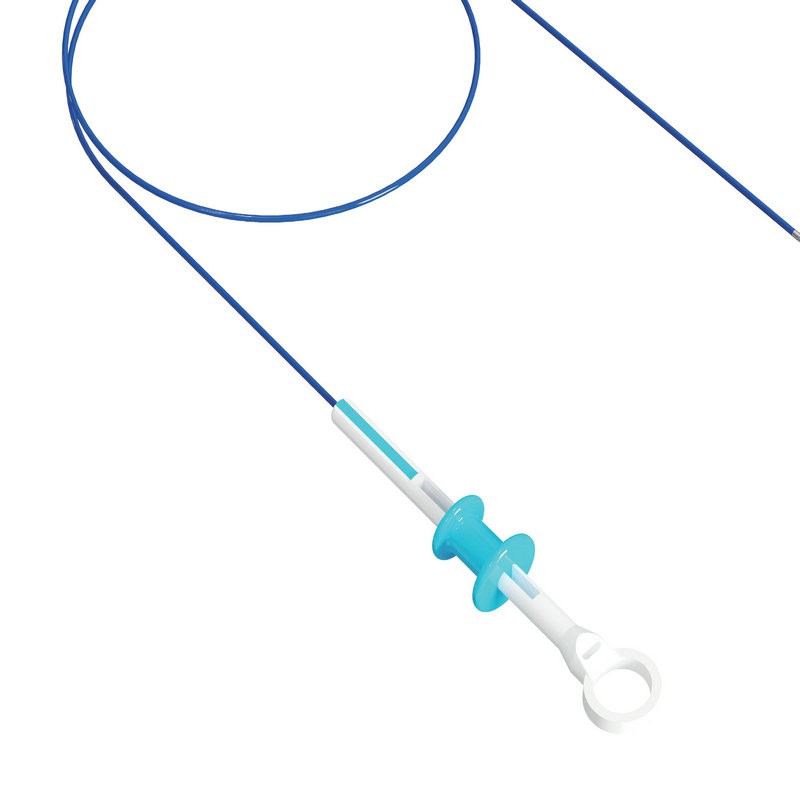
Single-use, EO-sterile monopolar ESD/EMR electrosurgical knife for marking, circumferential incision and submucosal dissection under high-frequency current. Four head types — D (round ball), T (ceramic insulated), H (L-shaped hook) and J (triangular) — with integrated submucosal-injection port, rotatable sheath and adjustable blade extension; channels ≥2.0 / ≥2.8mm, lengths 1600–2300mm.
PURETH disposable endoscopic submucosal dissection knives are monopolar electrosurgical instruments used through an endoscope with a high-frequency electrosurgical (cautery) unit for ESD and EMR of gastrointestinal lesions — marking, circumferential incision and submucosal dissection. The ZYM-KM series offers four electrode heads so the operator can match the blade to each procedural step and lesion location.
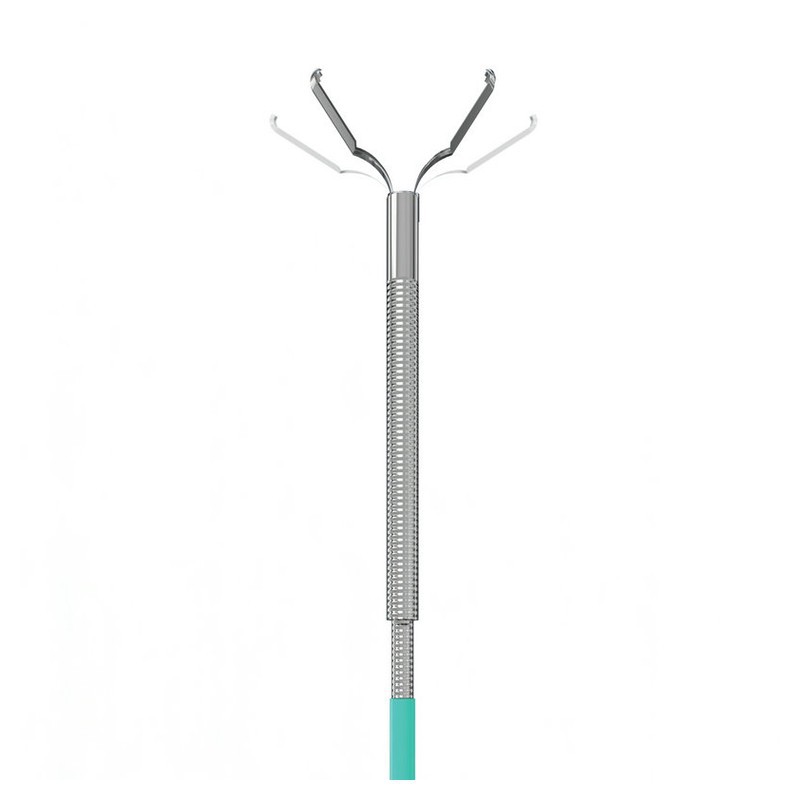
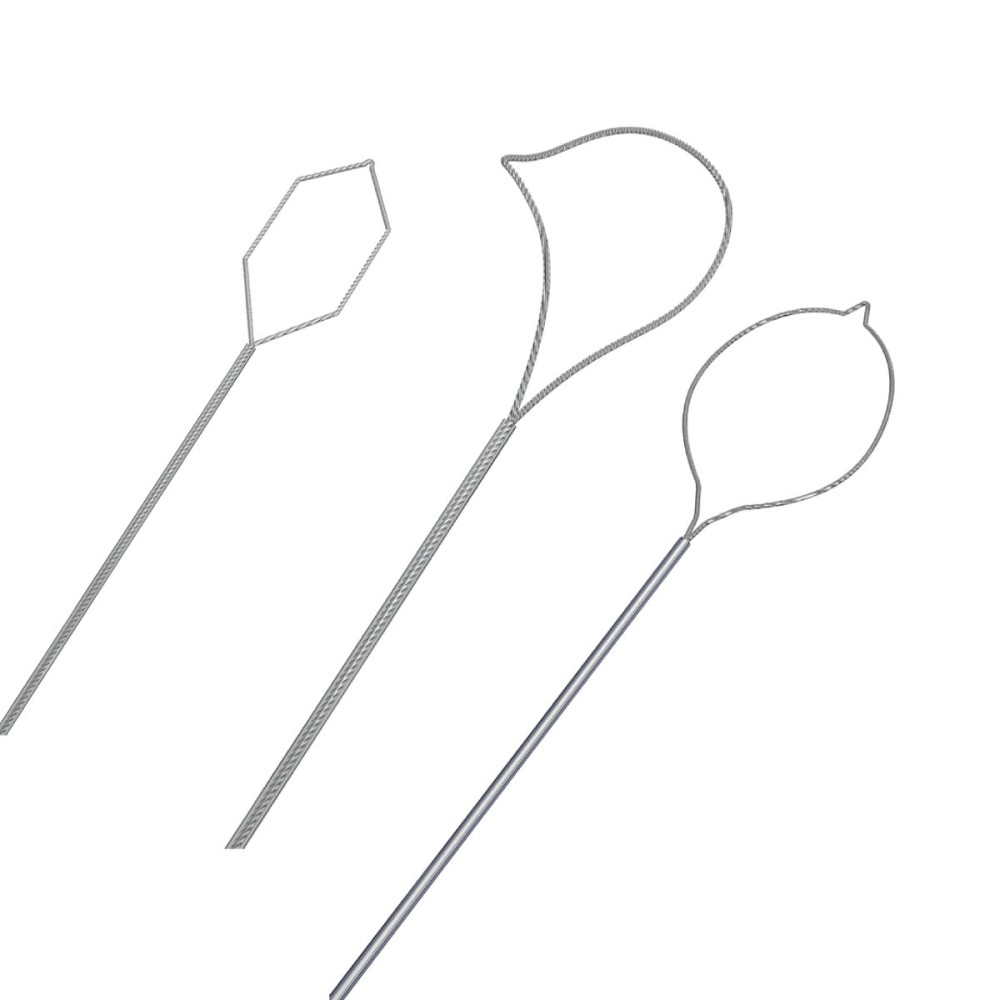
The D-type has a small round ball tip for marking and precise initial incision; the T-type carries a ceramic insulated ball tip that helps control depth and lower perforation risk while dissecting the submucosa; the H-type is an L-shaped hook knife that hooks and lifts tissue before cutting; and the J-type has a triangular tip giving a wider edge for circumferential incision. An integrated injection port delivers submucosal lifting solution without changing instruments, the sheath rotates for precise blade orientation, and the exposed blade length is adjustable. The knife is passive — it has no power source and must be connected to an electrosurgical unit with a patient return electrode.
Key Features
- Four electrode heads — D round ball, T ceramic, H hook and J triangular cover marking, incision, hooking and submucosal dissection in one range.
- Ceramic safety tip — the T-type ceramic head separates the electrode from the muscle layer, helping control depth and reduce perforation risk.
- Integrated injection port — deliver saline/lifting solution through the handle without exchanging instruments during ESD.
- Rotatable sheath — orient the blade precisely to the dissection plane for controlled cutting and coagulation.
- Adjustable blade extension — exposed electrode length set per step (1.5 / 2 / 4 / 4.5mm by model) for fine control.
- Upper & lower GI reach — effective lengths 1600–2300mm; sheaths for ≥2.0mm and ≥2.8mm working channels.
- EO sterile, single use — individually packaged; no reprocessing, no cross-infection.
FAQ
Which knife head types are available and what is each used for?
The ZYM-KM series offers four heads. D-type has a small round ball tip for marking and precise initial incision; T-type has a ceramic insulated ball tip that helps control depth and lower perforation risk during submucosal dissection; H-type is an L-shaped hook knife that hooks, lifts and cuts the submucosal layer; and J-type carries a triangular tip with a wider edge for circumferential incision. Choose by lesion location and technique.
Can it inject submucosal solution and rotate the blade?
Yes. The handle integrates an injection port so saline or a submucosal lifting solution can be delivered through the sheath without exchanging instruments, and the sheath/electrode can be rotated to orient the blade precisely. The cutting-blade extension (exposed electrode length) is adjustable according to the procedural step.
What lengths, channels and blade extensions are available?
Effective working lengths are approximately 1600, 1650, 1950, 2000, 2200 and 2300mm (catalog tolerance +/−10%). The sheath is listed for a 2.0mm (T-type models 40) or 2.8mm (H, J and D models, shown as ≥2.8 or >2.8) working channel. Maximum cutting-blade extension L1 is 4mm (T), 4.5mm (H/J), 2mm (KM-20 D) or 1.5mm (KM-15 D). See the table for all 16 models.
Does the knife generate heat by itself?
No. It is a passive monopolar accessory with no internal power source. It must be connected to a high-frequency electrosurgical (cautery) unit and used with a patient return electrode; the operator sets the cutting and coagulation power according to the equipment and procedure.
What certifications and export documents are available?
PURETH products are manufactured in accordance with the ISO 13485 quality management system and hold Class II and Class III registrations for the domestic market from the National Medical Products Administration (NMPA) of China. Export documents, free sale certificates, and specific market certificates (such as CE) will be provided or confirmed during the order phase; please inform us of your destination country and model list.
Standard model range (ZYM-KM), 16 models in four head types (D, T, H, J). Effective working length, maximum cutting-blade extension L1 and sheath channel are reproduced from the factory catalog; the catalog prints the channel as both “≥2.8” and “>2.8”, and the H-row L1 for model 165 appears as “4.5(+110)” (shown with †, evidently a print of 4.5(+1/0)) — please confirm with the factory if an exact value is required:
| Model | Effective Working Length | Max. Blade Extension L1 | Sheath / Channel | Cutting Blade | Head Feature |
|---|---|---|---|---|---|
| ZYM-KM-40-160-T | 1600 ±10% | 4 ±0.5 | ≥ 2.0 | Half-moon shape | T type (ceramic) |
| ZYM-KM-40-165-T | 1650 +10% | 4 ±0.5 | ≥ 2.0 | ||
| ZYM-KM-45-160-J | 1600 ±10% | 4.5 ±1 | ≥ 2.8 | J type (triangular) | |
| ZYM-KM-45-165-J | 1650 ±10% | 4.5 ±1 | > 2.8 | ||
| ZYM-KM-45-160-H | 1600 ±10% | 4.5 (+1/0) | ≥ 2.8 | H type (hook) | |
| ZYM-KM-45-165-H | 1650 ±10% | 4.5 (+1/0) † | ≥ 2.8 | ||
| ZYM-KM-45-195-H | 1950 ±10% | 4.5 (+1/0) | > 2.8 | ||
| ZYM-KM-45-200-H | 2000 ±10% | 4.5 (+1/0) | > 2.8 | ||
| ZYM-KM-45-220-H | 2200 ±10% | 4.5 (+1/0) | > 2.8 | ||
| ZYM-KM-45-230-H | 2300 ±10% | 4.5 (+1/0) | > 2.8 | ||
| ZYM-KM-20-160-D | 1600 ±10% | 2 ±0.5 | > 2.8 | D type (round ball) | |
| ZYM-KM-20-165-D | 1650 ±10% | 2 ±0.5 | > 2.8 | ||
| ZYM-KM-15-195-D | 1950 ±10% | 1.5 (+0.8/−0.2) | > 2.8 | ||
| ZYM-KM-15-200-D | 2000 ±10% | 1.5 (+0.8/−0.2) | ≥ 2.8 | ||
| ZYM-KM-15-220-D | 2200 ±10% | 1.5 (+0.8/−0.2) | > 2.8 | ||
| ZYM-KM-15-230-D | 2300 ±10% | 1.5 (+0.8/−0.2) | > 2.8 |
Code structure: ZYM-KM = submucosal dissection knife · middle two digits = sheath/channel class (40 = ≥2.0mm; 45/20/15 = ≥2.8 / >2.8mm) · next three digits = effective working length (160/165/195/200/220/230 = 1600–2300mm) · suffix D / T / H / J = D round-ball / T ceramic / H hook / J triangular head. Monopolar; use with a high-frequency electrosurgical unit and patient return electrode. EO sterile, single use.
Applications
Endoscopic submucosal dissection (ESD) and EMR of GI lesions — marking, circumferential incision and submucosal dissection across the upper and lower digestive tract.
Marking & Circumferential Cut
The D round-ball tip and T ceramic tip mark the lesion margin safely, while the triangular J head makes the circumferential incision around flat and elevated lesions.
Submucosal Dissection
The ceramic T and L-shaped hook (H) knives lift and dissect the submucosal layer for en-bloc resection, with injection through the integrated port.
Mucosal Resection
The shorter, finer D and T electrodes (1.5–4mm extension) support precise marking and EMR, while the J and H heads handle incision and dissection in the stomach and colorectum.