
Therapeutic Endoscopy Is Reshaping Early Gastrointestinal Cancer Care
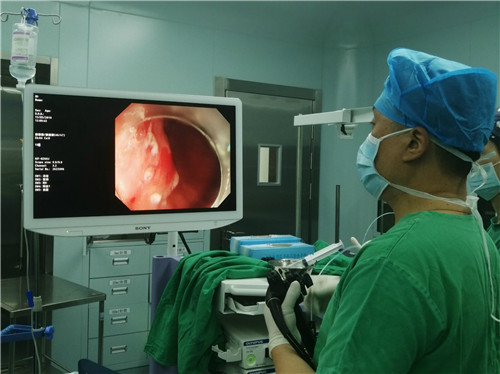
One of the most significant shifts in modern gastroenterology is the growing ability to treat early gastrointestinal cancers without major surgery. Endoscopic resection techniques — particularly endoscopic mucosal resection (EMR) and endoscopic submucosal dissection (ESD) — are changing how early lesions of the esophagus, stomach, and colon are managed.
An organ-preserving standard for early gastric cancer
ESD allows a lesion to be removed in a single, intact piece, enabling precise histopathological assessment of depth, differentiation, and vascular involvement. For appropriately selected early gastric cancers, the approach is now considered oncologically comparable to surgical gastrectomy while preserving the stomach and shortening recovery.
Large Asian studies have reported en bloc resection rates above 97%, and five-year survival rates around 96% for selected lesions. International guidelines now broadly align in positioning ESD as the preferred treatment for many superficial gastric neoplasms, although recommendations vary for undifferentiated tumors and deeper submucosal invasion. (BMJ Frontiers of Gastroenterology, "Management of gastric neoplasia")
The global ESD market was estimated at roughly USD 0.82 billion in 2025 and is projected to reach about USD 1.4 billion by 2036, with India and China identified among the fastest-growing markets. (Fact.MR, Endoscopic Submucosal Dissection Market)
A transformation in Barrett's esophagus
The same trend is visible in the esophagus. Over the past decade, management of dysplastic Barrett's esophagus has moved away from esophagectomy toward endoscopic eradication therapy — endoscopic resection of visible lesions followed by ablation of the remaining affected segment. Combination approaches achieve clearance of neoplasia in more than 90% of cases in experienced centers, with a markedly lower burden of illness than surgery. (BMJ Frontiers of Gastroenterology, "Update on the management of Barrett's neoplasia")
ESD is gaining a larger role for bulky, scarred, or recurrent lesions where en bloc resection offers clearer staging and better control.
Colon polyps and beyond
In the colon, structured piecewise EMR has become a well-established way to remove large polyps that would otherwise require surgery, while ESD is increasingly used for lesions suspected of superficial invasion. The technique supports complete removal and accurate staging, reducing the risk of recurrence.
The challenges: skill and access
The principal constraint is no longer the technology itself, but expertise. ESD carries a demanding learning curve, and adoption in Western centers has been slower than in East Asia, reflecting lower disease prevalence, fewer screening programs, and limited training opportunities. Reported R0 resection rates have historically been lower in Western practice, underscoring the impact of case volume and structured education.
Robotic-assisted systems, simulation platforms, and accelerated training curricula are emerging as tools to broaden specialist capacity. Centralization of complex cases in high-volume referral centers is also a recurring theme.
Looking ahead
As image-enhanced endoscopy and AI improve early detection, more lesions are being found at a stage where endoscopic cure is possible. The result is a quieter revolution: for a growing number of patients, early gastrointestinal cancer is managed through an outpatient procedure rather than an operation — provided that detection, training, and care pathways keep pace.
This article is provided for general industry information and does not constitute medical advice. Treatment decisions should be guided by qualified clinicians and current guidelines.


