
AI in Gastrointestinal Endoscopy Moves from Novelty Toward Routine Practice
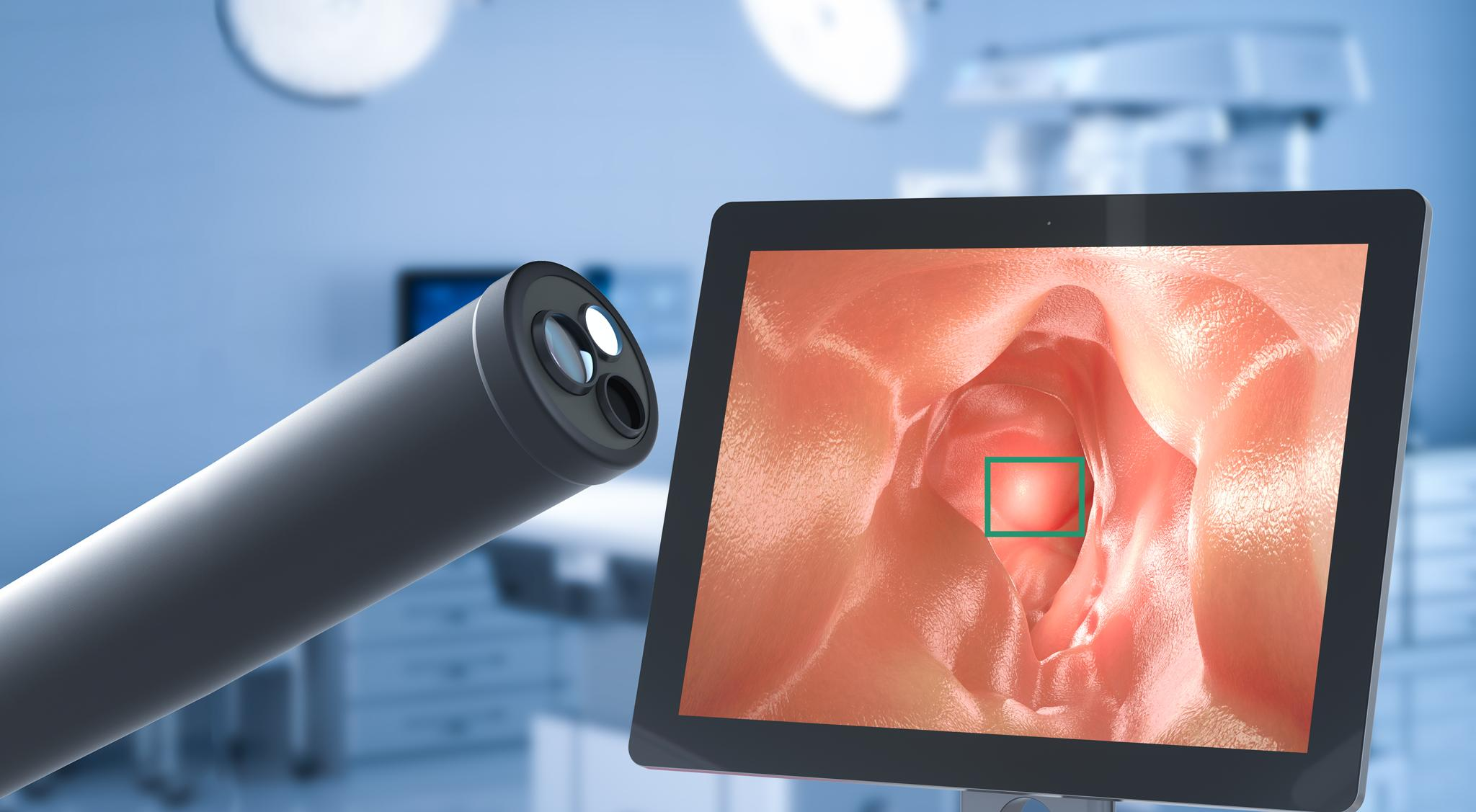
Artificial intelligence is quietly becoming a standard feature of modern gastrointestinal endoscopy. After several years of proof-of-concept studies, computer-aided detection and characterization systems are now being integrated into routine colonoscopy and, increasingly, into upper-GI and pancreaticobiliary procedures.
A maturing evidence base in colonoscopy
Colonoscopy remains the most clinically established application of AI in endoscopy. A 2026 review published in Diagnostics concluded that computer-aided detection systems have consistently improved adenoma detection rates and reduced miss rates across both randomized trials and real-world studies. (Diagnostics, "Advances in Artificial Intelligence for Gastrointestinal Endoscopy: 2026 Update")
The benefit is most consistent for small and diminutive lesions, which are easiest for even experienced endoscopists to overlook during withdrawal. Effects on advanced adenomas and other high-risk lesions are less uniform, and researchers caution that performance varies across platforms and screening populations.
A 2026 network meta-analysis in the Journal of Medical Internet Research reached a similar conclusion: the overall advantage of AI appears to be driven primarily by improved detection of diminutive polyps, with limited incremental value for larger lesions. (JMIR 2026;28:e95841)
Measuring quality, not just lesions
Beyond detection, AI is being used to quantify procedural quality. New metrics such as effective withdrawal time and qualified mucosal observation time assess how clearly and thoroughly the colon wall is examined — a more granular measure than withdrawal duration alone. In one prospective study, a high qualified-mucosal-observation time was associated with substantially higher adenoma detection.
Beyond the colon
The scope of AI is widening. Emerging applications target Barrett's esophagus neoplasia detection, inflammatory bowel disease scoring, endoscopic ultrasound, ERCP, cholangioscopy, and capsule endoscopy. Cloud-based architectures allow algorithms to be updated within existing hospital networks without major on-site infrastructure, improving scalability.
Limits remain
Despite the progress, much of the evidence still relies on surrogate endpoints such as detection rates and procedure time. Data showing that AI directly reduces colorectal cancer incidence or mortality — or lowers overall healthcare costs — remain limited. Questions about generalizability, algorithmic bias, image-quality variability, and regulatory oversight continue to shape deployment.
Clinicians and researchers also emphasize the importance of explainable AI, particularly as models grow more complex, so that recommendations can be understood, audited, and trusted.
Outlook
The direction is clear: AI is evolving from a supportive technical novelty into an integrated component of endoscopic care. Its long-term value will depend on whether it can improve the outcomes that matter most to patients — and on thoughtful collaboration among clinicians, industry, and regulators as the technology matures.
This article is intended for general industry information and is not a substitute for professional medical guidance. Findings reflect published research and may evolve as new evidence emerges.


